AI in Practice The same problem, thirty years later From early websites to AI assistants, the core challenge has never changed: how do you make what an organisation knows available to the people who need it?
AI Governance The Poisoned Library When an AI agent trusts a tool server the way an app trusts a package, the supply chain attack surface moves with it. This is not a new problem wearing new clothes.
AI Strategy The Layer AI Is Moving Into Now AI started in the operational layer. It is now working its way into coordination, prioritisation, and strategy. That shift raises a question most organisations have not yet asked.
typography A font is not a file For thirty years I thought of fonts as objects. A missing font on a working day, and a workaround from my wife, changed that mental model completely.
Tools Back in the Search Arena, This Time With Vectors Three years after writing about site search, I rebuilt mine from scratch: Algolia for full-text speed, a vector database for semantic retrieval, and a RAG pipeline that made both layers useful.
Europe The Axis That Made the Chips The Netherlands built its first computer in Amsterdam in 1952, moved the thinking to Eindhoven, and produced ASML. That line is history. It is also a blueprint.
Identity Passkeys: Better Lock, Borrowed Door Passkeys fix the weakest part of authentication. But they hand your credentials to Apple, Google, or Microsoft and the session cookie problem remains untouched.
AI in Practice The Session Unlocks the Door. For Anyone. After the password, the session takes over. It doesn't know who's holding it.
AI in Practice Stripping the medium McLuhan said the medium is the message. I've spent the last year proving him right by trying to escape it, converting everything I consume into plain text, for myself and for machines.
AI in Practice Unpack on Arrival Rendering means two things on the web. Which one happens first determines whether your content exists for AI crawlers, search bots, and readers alike.
AI in Practice RSS is not dead. It just changed audience. RSS was built for human readers who wanted control. It turns out that description fits AI crawlers perfectly. The format found a second life it never asked for.
AI in Practice The Detective and the Swarm A traffic spike with no statistics counterpart, 400 requests in a minute, 25 countries. The clues were all there. So was the twist: I built the bait myself.
AI in Practice Markdown, the WD-40 of Digital Information Markdown has barely changed in twenty years while everything around it was rebuilt. That's not luck. It's what happens when a format finds the exact sweet spot between content and meaning.
The shift from x86 to ARM is about power, not just performance Switching from an Intel iMac to Apple Silicon felt like a hardware upgrade. It turned out to be an architecture story, and that story is now reshaping the cloud.
AI in Practice I Thought I Was Optimising for Speed Building a caching layer for my blog turned into something else: a window into who actually reads it, and what reading even means now.
AI in Practice Thirty Years of Caching, Sorted in an Afternoon HTTP caching never quite made sense, until AI tools made it legible enough to actually implement. And the reason it finally mattered: the audience had quietly changed.
AI in Practice My Visitors Are Not All Human. That Is Fine. I built a traffic dashboard for my own site. What I found wasn't alarming, it was interesting. A publisher's notes on bots, borrowed identities, and editorial agency.
Europe When the Platform Becomes the Policy The EU is taking Meta to court over WhatsApp AI access. The Dutch government is quietly switching messengers. Both point to the same structural shift.
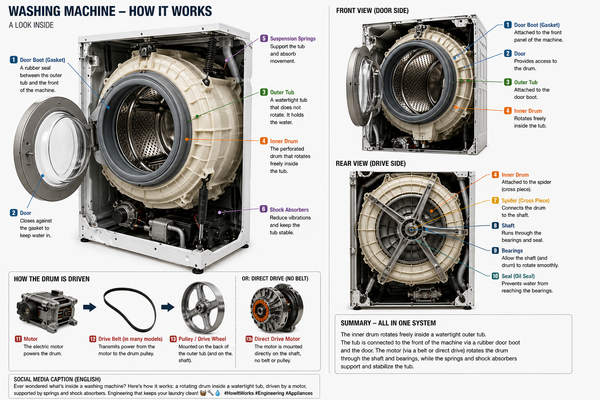
AI in Practice GPT Image 2 Changed My Mind on AI Visuals I had quietly written ChatGPT off for image generation. Then GPT Image 2 showed me a technical diagram of a washing machine, and I had to revise that judgment.
AI in Practice Dressing up an AI Model in a Harness An engineer friend calls the infrastructure around an AI model a harness. The word is technically accurate and instinctively wrong. What that tension reveals.
AI in Practice Built in, not bolted on Most organisations are adding AI to software that was never designed for it. The real gains come when AI is part of the architecture, not an add-on to it.
AI in Practice The Workspace You Already Have Knowledge workers have built informal AI workspaces from Claude, Gemini, and Google Drive. The gap isn't the tools. It's governance, sharing, and where the data lives.
AI Governance When Git Grows Up Git-based knowledge management has always been too complex for content teams. Agents change that, and the implications for governance-heavy organisations are worth watching.
AI in Practice Delegating Past Your Own Ceiling Cloudflare is powerful enough to extend anything Ghost can't do. The problem is complexity. Claude Code changed that by operating the layer I previously couldn't reach.
AI in Practice Guests That Should Behave Bots are modern guests. Most are welcome. But when they arrive in disguise with a real browser and spike your analytics, hospitality has limits. A Cloudflare story.