
Kobo and Kindle solve different problems


For a long time, I treated Kobo and Kindle as roughly the same thing: e-readers with different ecosystems. Only when I started using them side by side did it become clear that they are built around very different setups.
Not different features. Different models.
Once you see that, the choice becomes much simpler.
Quick video on the topic.
Two ways of getting content to a reader
With Kobo, the device is the centre.
You connect it to a computer, copy files onto it, and that’s where they live. The book is on the device, and the device is the destination. The cloud, if you use it at all, is secondary.
With Kindle, the account is the centre.
You don’t really put files on the device. You send them into Amazon’s system, and the device pulls them down. The book lives in the cloud first. The Kindle is one of several ways to read it.
That single difference explains most of the experience.
Kobo: device-first, edge-based
Kobo works best when you treat it like a quiet, durable object.
You put books on it deliberately. They stay there. Reading position and annotations live on the device. With tools like Calibre, you can run it almost entirely outside Kobo’s ecosystem.
It has more friction. Often a cable. Often a computer.
But that friction fits long-term reading. It assumes you care about the book, want to keep it, and might return to it.
Kobo feels like a library.
 Rob Hoeijmakers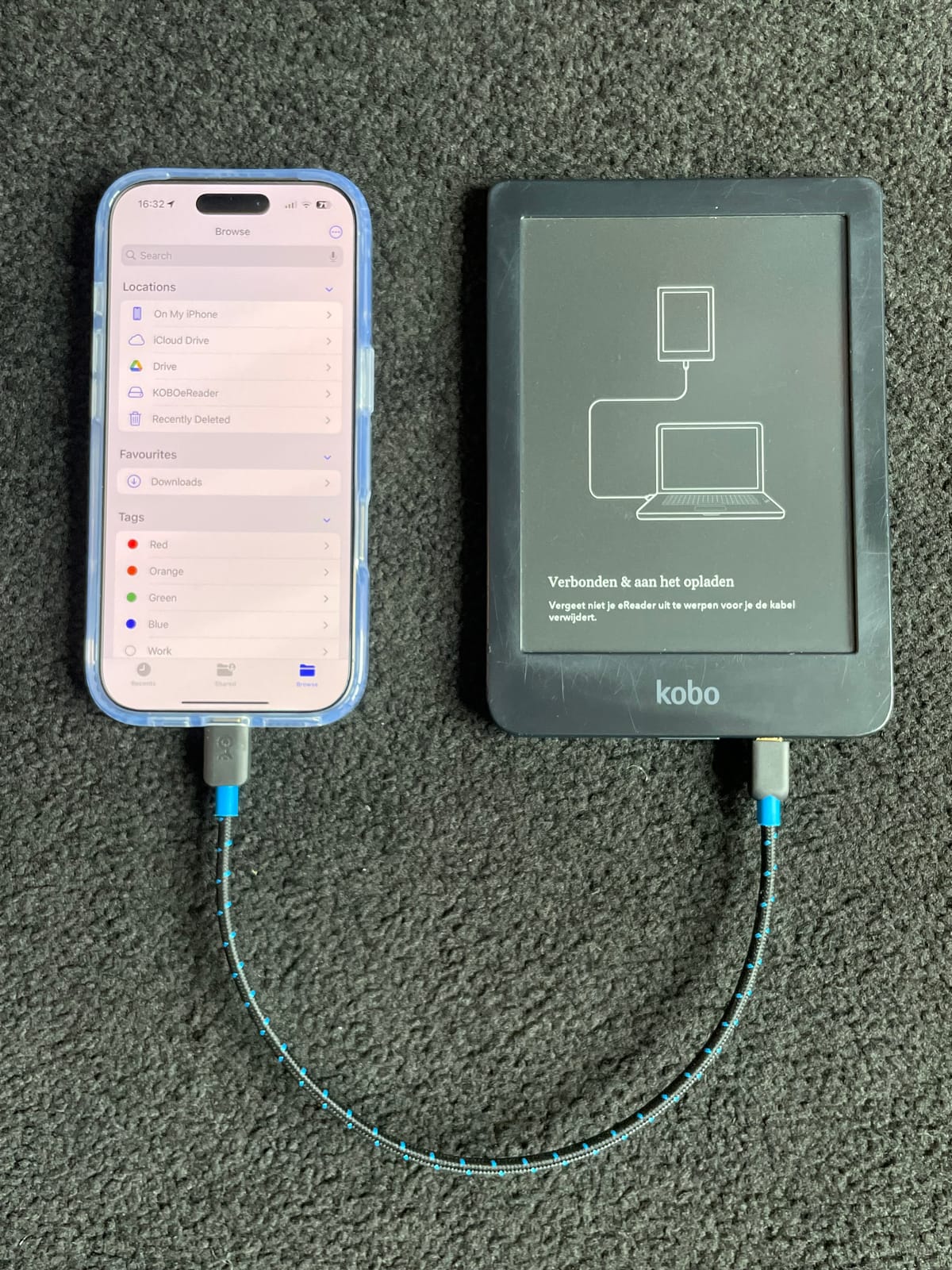
Kindle: account-first, cloud-operated
Kindle works best when you treat it like a service.
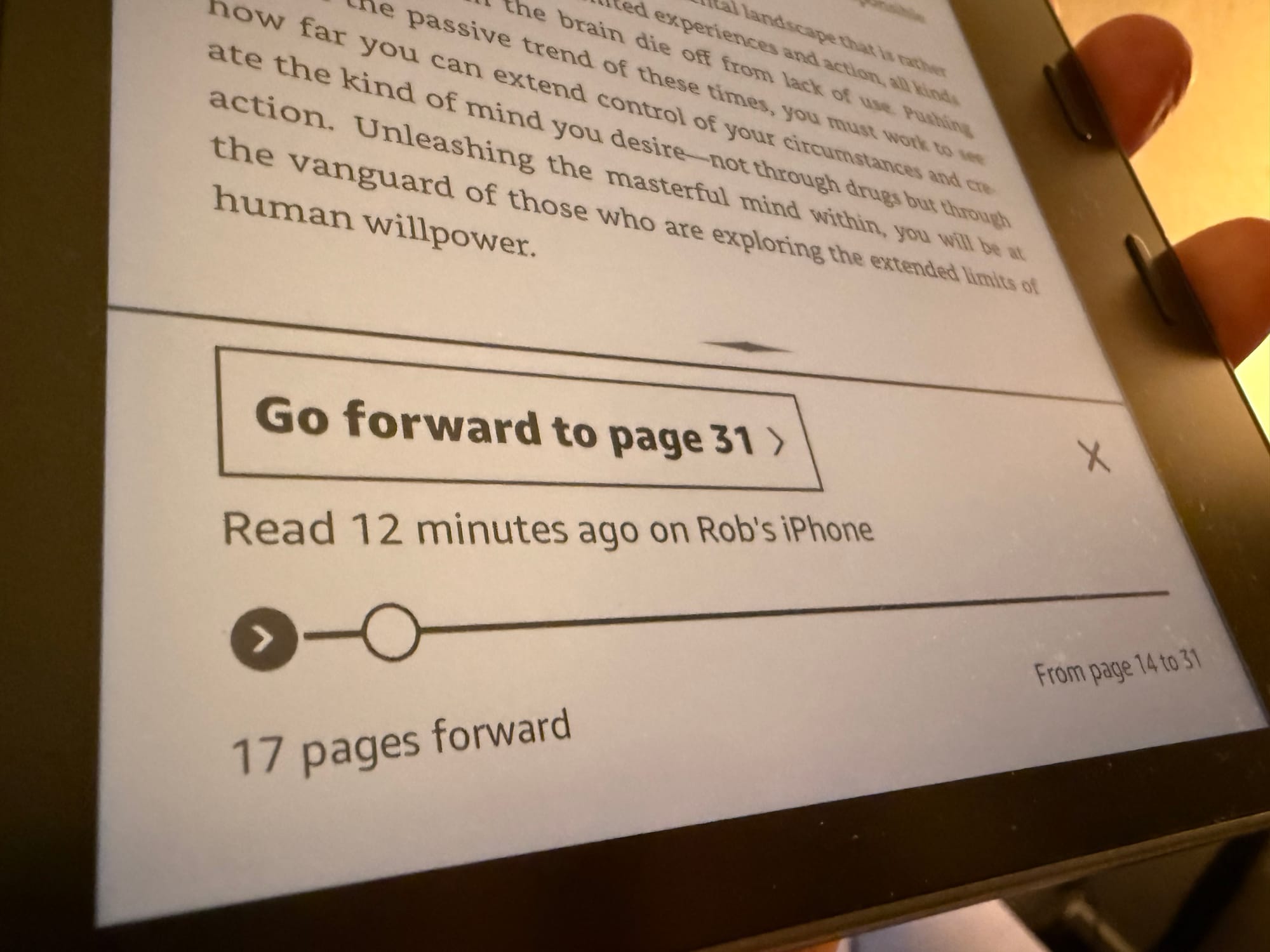
You send documents to your account. They appear wirelessly. They sync across devices. You read them, and you can remove them again without much ceremony.
That makes it ideal for:
- PDFs
- Reports
- Business books
- Things you read once or twice
It also means you depend on Amazon being there. The system only really works because Amazon operates it end to end.
Kindle feels like an inbox.
One extra thing that matters: screens
Kindle is not just an e-ink reader. It’s a delivery system.
The same document can be read:
- On e-ink, quietly and with low energy use
- On a phone or tablet, with colour and zoom
- On a desktop screen, where layout really matters
That is especially useful for professional PDFs. Many of them are designed visually, with columns, charts, and typography doing part of the work.
With Kindle, you can switch between those forms without changing how the document is delivered.
Kobo doesn’t really do that. There, the device is the destination.
Where I landed
Once I stopped trying to make one device do everything, it became obvious.
- Books I want to keep live on the Kobo.
- Documents and work-related reading go to the Kindle.
Kobo is where books stay.
Kindle is where documents pass through.
The devices didn’t change.
My expectations did.
 Rob Hoeijmakers
 Rob Hoeijmakers