
Where deeptech really happens
From AI to nuclear ships. A look at the heavy, slow innovation shaping Europe’s future and why it matters more than the tech we usually talk about.

A few months ago, I interviewed Alain le Loux of Cottonwood Technology Fund. It helped me see deeptech as something rooted in physics, materials and advanced engineering. Not the quick-turn world of consumer software.
But I still pictured technologies that fit in labs or data centres.
Then I came across Allseas. An offshore construction company with Dutch roots working on nuclear reactors for ships. That made the definition stretch again.
This piece is about that shift in perspective. And why I think it matters for Europe.
Quick takeaways
- Deep tech is physical as much as digital
- Financing models shape which ideas become real
- Industrial companies sometimes drive breakthroughs that startups cannot
- Europe’s strengths may lie in places we rarely celebrate
- R&D investment is strategic infrastructure, not a luxury
What Alain le Loux taught me
From Alain, I learned how difficult it is to finance deep tech at the early stage. Cottonwood invests long before the market is clear. Their risk is scientific uncertainty. Their reward, when it works, is transformative.
This model fits well when technologies can scale quickly and generate global demand. But it becomes harder the moment the innovation is big, slow and tightly regulated.
I thought I had absorbed that lesson. Then something unexpected tested it.
 Rob Hoeijmakers
A surprising example
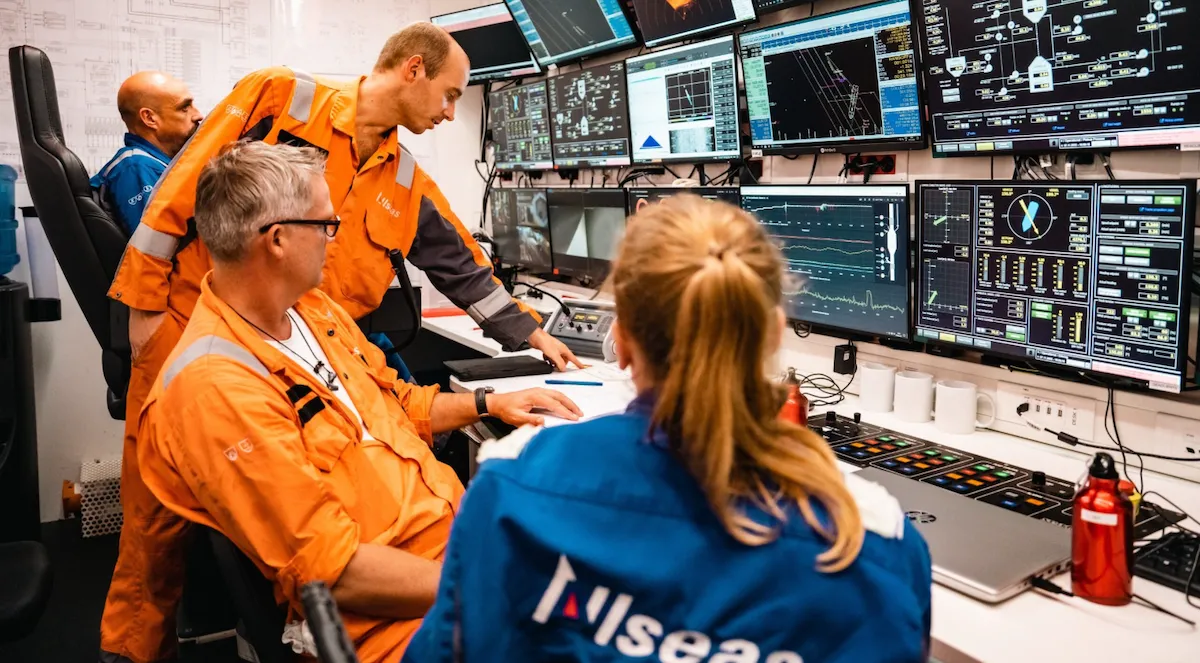
Allseas is a private, family-owned group with its engineering heart in the Netherlands. They design ships that can lift entire platforms out of the sea. Now they are investing hundreds of millions of euros in a small modular reactor.
The headlines treat the reactor as a climate move. That is certainly part of it. But I suspect an equally important motive lies in industrial sovereignty: securing energy independence for vessels that perform demanding work far from shore.
This is deep tech of a very physical kind. It cannot be rushed. It requires trust, long planning horizons and a tolerance for complexity. Startups rarely get the space to operate like that.

How money shapes deep tech
My interest in R&D has grown sharply in recent years. I see it disappearing as a share of the Dutch economy, even as we talk loudly about innovation. That contradiction bothers me.
Allseas reminded me that there are still companies willing to put serious capital into the hardest questions. Their investment looks like corporate R&D funded from their own balance sheet. The Dutch state appears mainly in a regulatory role, providing safety oversight and public legitimacy.
This is not a typical venture story. There is no pitch deck. No exit. The value is realised in future operational capability and reduced dependence on scarce fuels.
It makes me think we underestimate how often Europe’s major innovations are financed by industry itself.
 NL Times
Where Europe stands
I want to be careful here. It is too early to say that Europe as a whole is absent. Funding and cooperation may appear later.
Still, the early signal is instructive. When technology becomes big and slow, Europe’s support systems can feel hard to access. Innovators sometimes move faster by acting nationally first.
That tension sits at the heart of the European project: the desire for sovereignty, and the difficulty of aligning effort at scale.
We need both coordination and decisiveness. Right now, the balance is not easy.
Bits and atoms together
Even in the world of steel and reactors, digital capabilities are pivotal. Simulations, control systems and verification are where most of the risk is reduced. The entire safety case lives first in software, not in metal.
There is a quiet convergence underway. The infrastructure that builds the physical world increasingly depends on the same intelligence that powers digital services.
If we imagine the future of technology as purely virtual, we miss where the largest investments will flow: into systems that merge computation with energy, materials and logistics at scale.
 Rob Hoeijmakers
Industrial strengths we overlook
We often describe innovation in terms of what we lack: missing platforms, fewer unicorns.
But there is another picture. Europe holds deep competence in nuclear engineering, maritime systems and regulatory governance. These are technologies that operate in the background until they fail, and failure is unacceptable.
We rarely celebrate this kind of capability because it is not fast or visible. Yet it underpins climate action, industrial competitiveness and security.
If we do not recognise these strengths, we risk underfunding the very sectors that carry the energy transition. Sovereignty is not only built in software. It is also welded, certified and maintained over decades.
Conclusion
This small discovery changed how I think. Deep tech is not a niche. It is a spectrum. From algorithms to reactors.
And if I care about innovation, I have to care about how it is financed. R&D is not a nice-to-have. It is the part of the economy that builds the conditions for the rest.
Europe talks confidently about sovereignty in the age of AI and energy transition. Delivering it will depend on supporting the kind of innovation that is heavy, slow and ambitious. The kind that does not show up on our screens, but moves quietly across the water.
 Rob Hoeijmakers
 Rob Hoeijmakers