My First Mac App
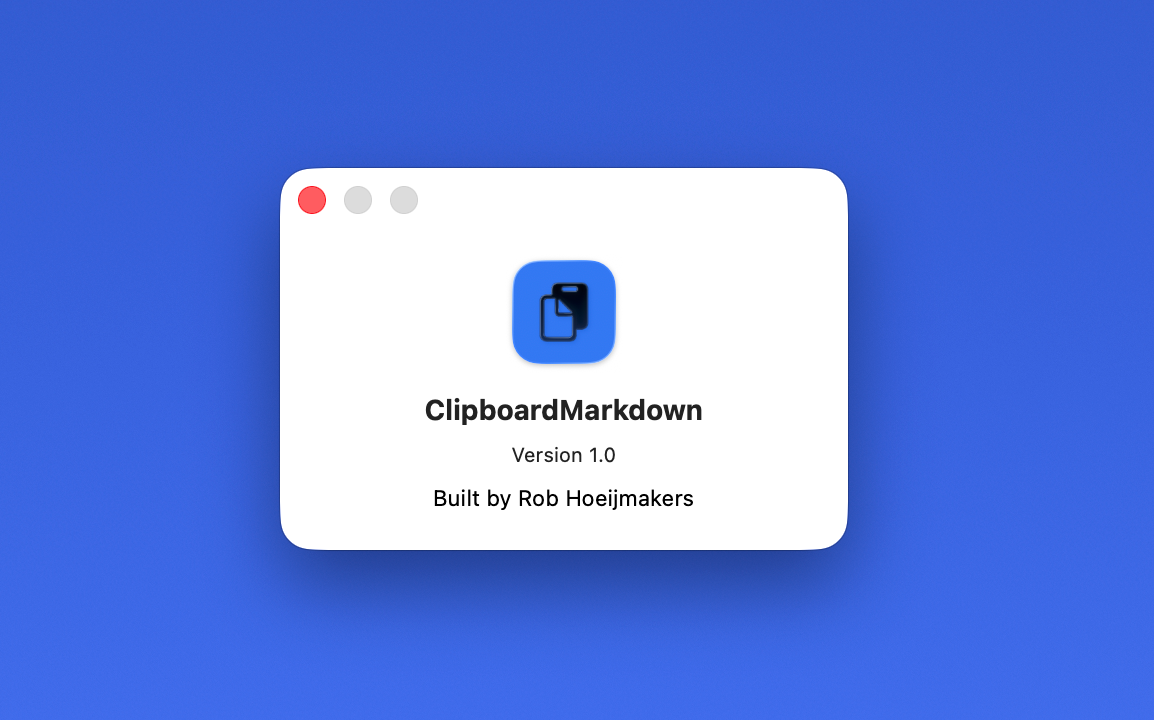
I described a workflow problem to Claude. It wrote me a compiled Swift app using Xcode. That sentence still feels odd to type.


The problem was simple and specific. Every time I wanted to save something to a Markdown file, I had to open an editor, paste, name the file, save. The sequence could take a minute. I looked for a web clipper, but every option pulled me into browser extensions and cross-platform wrappers. What I needed lived at the OS level, not the browser level.
So I described it to Claude. And Claude wrote me a Swift app.
What it does
The app sits in my Applications folder. I copy something, open it, choose between plain text or HTML, and save directly to a folder. That is it. Along the way I learned something I hadn't known: clipboard content exists in multiple formats simultaneously. The same copied text is available as plain text, as HTML, as rich text. Choosing between them is itself a design decision. The app makes that choice explicit.
The category shift
What matters here is not the app. It is the category it belongs to. Swift is a compiled language. Xcode is a professional framework. This is not a Python script or a browser extension. It is native software, built with the same tools Apple developers use, running with the same OS-level access.
I am not a developer. I can think in terms of digital products, reason about edge cases, describe behaviour precisely. What I have never had is the ability to translate that into something executable at this level. That translation layer is what shifted.
 Val Kamenski
Software for one
Most software is general-purpose because specificity doesn't scale. The economics push toward horizontal tools: something that solves a problem for enough people to justify building it. What AI makes possible is the opposite: software for one workflow, one environment, one person's exact friction. It doesn't need a product launch or a pricing page. It just works.
I have a mental list of problems like this, accumulated over years: too specific to find an existing solution, too niche to commission. That list is shorter now.
The question I keep returning to: as more people with product thinking but no coding background start shipping their own narrow tools, what does that do to the market for the broad ones?
 Rob Hoeijmakers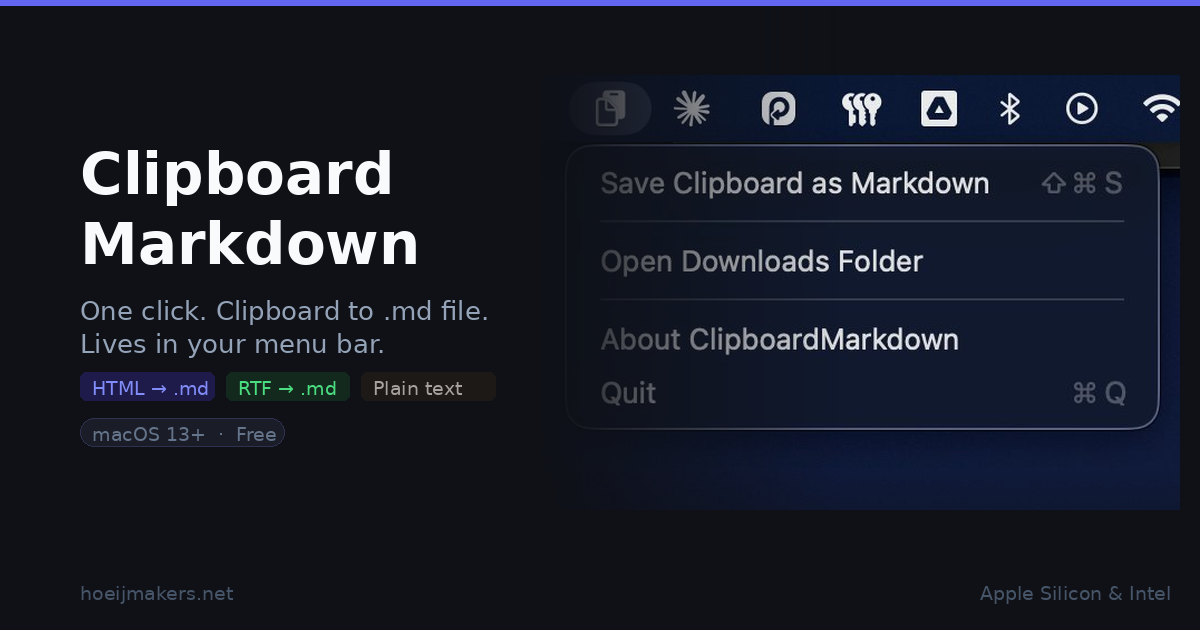
I made the app available, give it a try.
 Rob Hoeijmakers
 Rob Hoeijmakers
 Rob Hoeijmakers