Cybernetics: The Idea Behind Cyber
Before it meant computers, cyber meant steering. This piece follows that idea from its origins to the way it now shapes states, platforms, and our digital lives.


When I first encountered the word cyber in the early 1990s, it meant something entirely different from what it means today. The web was just beginning to take shape, and cyber felt like an invitation: cyberculture, cyberart, cyberspace. It carried imagination. It suggested exploration.
Over the years, that openness hardened. “Cyber” became the vocabulary of defence: cybersecurity, cybercrime, cyberwarfare. A word that once felt expansive narrowed into a border.
Recently, reading Dan Wang’s Breakneck, I realised that to understand this shift, you need to trace the word back to its origins, long before it had anything to do with computers.
The Original Meaning of “Cyber”
The Greek word κυβερνήτης (kybernetes) means steersman, helmsman, one who guides a ship. From this root we get governor and government. The earliest meaning of cyber is to steer, to guide a system through uncertainty.
In the nineteenth century, André-Marie Ampère revived the term as
la cybernétique or the science of governing.
In 1948, Norbert Wiener deliberately borrowed the word for a new science of feedback, control, and communication. Cybernetics described how systems steer themselves, whether animals, machines, organisations, or societies.

A Book That Re-Opened the Question
Reading Breakneck brought this tension into sharp relief. Wang describes how cybernetics entered China not as an abstract import but as a full intellectual project: taught in universities, applied in engineering, and used to frame problems of technology and society.
One of the policymakers behind the one-child policy appears as a follower of this thinking, convinced that complex systems, including populations, could be steered through measurement and correction. Seen through that lens, the policy becomes a large-scale cybernetic loop: a system adjusting itself through quotas and feedback, guided by the belief that stability could be engineered.
 Rob Hoeijmakers
A Parallel Insight: Varoufakis and the Corporate Cybernetic Plan
Around the same time, I revisited Yanis Varoufakis’s work. In one talk, he argues that Amazon is not a capitalist market but a centrally planned, cybernetic command economy. It looks like a market but functions as a feedback machine:
- total information collection
- demand prediction
- supplier ranking
- consumer steering through recommendation loops
Placed alongside Wang’s observations, a symmetry appears. A Chinese ministry and an American tech giant both rely on cybernetic governance: prediction, measurement, correction, optimisation.
How “Cyber” Became Digital
The journey from cybernetics to the digital “cyber” we use today unfolded gradually, through a series of shifts in meaning.
1. Cybernetics → Computing
Early AI and information theory borrowed cybernetic ideas.
2. Cybernetics → Cyberspace
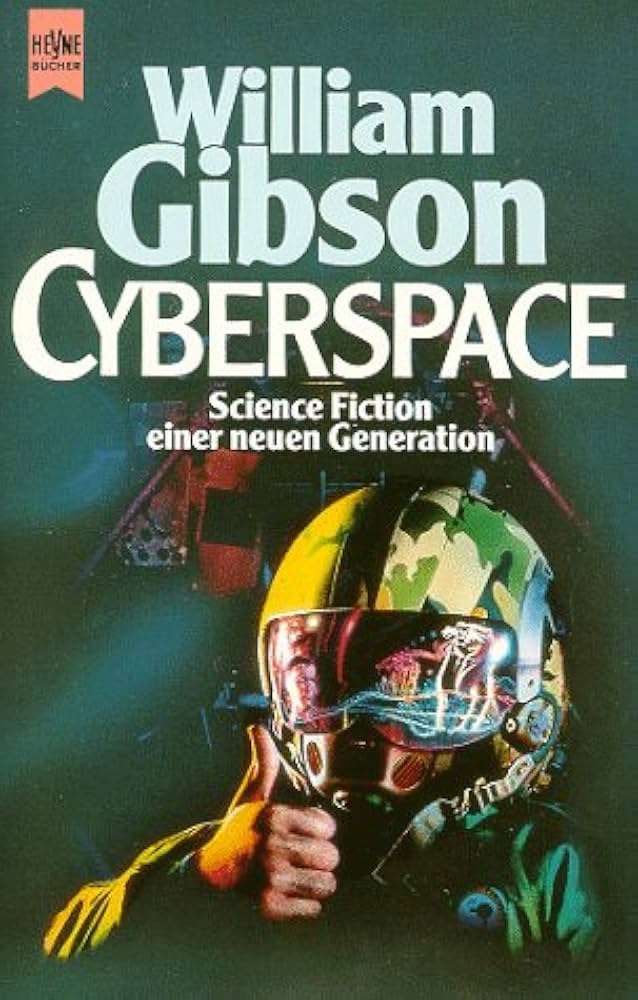
In the 1980s, William Gibson imagined a virtual world and named it cyberspace.
3. Cyberspace → Cybersecurity
By the 1990s, governments used “cyber” for digital threats and defence.
The Two Faces of Cybernetics
Cybernetics contains two impulses:
- Regenerative, when feedback enables learning
- Regulative, when feedback enforces stability
At the Helm of Our Own Thinking
Feedback shapes many of the systems we use today, from platforms to public policy. It’s interesting to think how an idea from mid-century mathematics ended up guiding so much of daily digital life. Wiener saw feedback as a way to notice consequences, not to settle arguments.
That still feels like a useful way to approach the world: understanding the patterns, and leaving space for new interpretations. Reading and writing about all this encourages me to keep being the helmsman in a rapidly changing intellectual landscape and especially now, when talking to AI can make it easy to give away a bit of our own agency without realising it.
 Rob Hoeijmakers
 Rob Hoeijmakers