The Real Cost of Leaving Microsoft 365
The ICC left Microsoft 365 for OpenDesk, trading convenience for control. A lesson in digital self-awareness and the true cost of sovereignty.


When the International Criminal Court (ICC) switched from Microsoft 365 to the German open-source suite OpenDesk, it barely made mainstream headlines.
But in tech governance circles, it caused ripples, and not because of the software itself, but because of what it represents: a rare act of digital self-determination.
Most organisations use Microsoft 365 or Google Workspace as if they were natural utilities, as invisible as water or air. The systems feel eternal, part of the landscape of work.
So when someone decides to leave that landscape, it’s worth asking: why, and at what cost?
Because changing your office suite isn’t just a technical project. It’s a human, financial, and cultural event.
 Chris Gattringer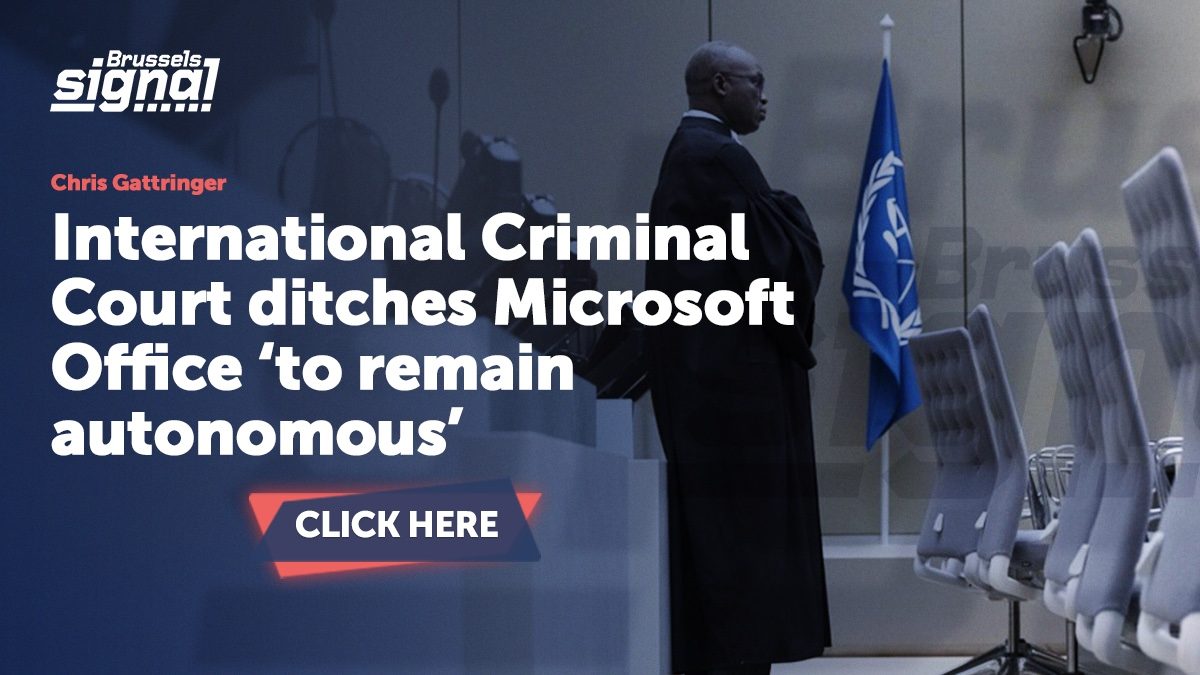
The Drivers for Change
Few organisations leave Microsoft 365 voluntarily.
The usual drivers for change are defensive rather than visionary, often born from risk, regulation, or sovereignty concerns.
Digital sovereignty and independence
For public institutions like the ICC, the motivation is clear: data hosted on American infrastructure falls under U.S. jurisdiction, even when stored in Europe.
A switch to OpenDesk (built on Nextcloud, LibreOffice, and Matrix) means hosting under European law, on open standards, without the extraterritorial pull of the U.S. CLOUD Act.
Compliance and public trust
Government bodies and NGOs face increasing scrutiny over where and how they store data. For them, transparency is a form of legitimacy. Running open software isn’t just an IT choice; it’s an ethical stance.
Cost management
For some, it starts as a financial question. Subscription costs scale linearly (per seat, per month), and Microsoft’s price tiers keep rising. But pure cost savings are rarely the real motive. The deeper wish is to regain control over what’s being paid for, and why.
Strategic alignment
Some European institutions adopt open systems for strategic reasons: aligning with EU digital sovereignty goals, supporting local providers, or avoiding vendor capture.
Still, it’s worth noting: these are all protective motives.
The story begins with “we can’t stay,” not with “we want to leave.”
The hard part is that sovereignty is not only about ownership but about reliability over decades. If domestic providers can be acquired at any moment, then legal jurisdiction alone does not guarantee autonomy. We need European capabilities that are both strategically independent and operationally excellent. Otherwise the choice becomes a trade-off: local in name, global in practice. Rob Hoeijmakers.
The Human Dimension: Skill Lock-In
Once you look beyond servers and licenses, the real lock-in reveals itself: people.
Employees have grown up with Word, Excel, and Outlook. They know where buttons live, how to share files, how to comment, how to search. That fluency is invisible until you take it away.
Organisations carry an enormous amount of embedded skill capital. It’s not written down anywhere. It lives in muscle memory, in the way teams collaborate, and in the shared vocabulary of daily work:
“I’ll send you the Excel.”
“Let’s track it in a table.”
“Check the shared drive.”
Replace the platform, and those simple sentences stop working.
You’ve changed not just tools, but the language of work.
That’s why migrations of this kind are so disruptive: they rewrite social habits, not just configurations. Suddenly, people need training for tasks they could once do half-asleep. Confidence dips. Productivity slows. The new tools might be fine, but the feel of work is gone, and that takes months to rebuild.
In that sense, skill lock-in is a form of cultural dependence. When people know the shortcuts, the file paths, the logic, they move faster, trust more, and make fewer mistakes. Breaking that fluency is costly in morale as well as time.
The Technical and UX Challenges
Even for IT teams that support the change, the early phase can feel like swimming upstream.
Integration and authentication
Microsoft 365’s magic lies in Entra ID (formerly Azure AD) and its invisible single sign-on. Change the stack, and you lose that frictionless identity layer.
Nextcloud and Keycloak can replace it, but it takes expertise and usually, a few rough months.
Compatibility and context
Word documents open fine in LibreOffice, until they don’t.
Macros, comments, and formatting quirks appear.
Shared links, calendars, and version histories must be rebuilt.
Search and sharing
In Microsoft 365, you can search across email, files, and chats in one stroke.
Open alternatives require stitching together multiple systems.
You get transparency, but lose cohesion.
Support and maintenance
In a subscription world, updates are automatic.
In self-hosted or federated setups, you own the maintenance.
That means patching, monitoring, backups, and a certain level of internal IT craftsmanship.
In short: OpenDesk or similar alternatives work, but they shift responsibility.
You trade convenience for control.
Office software once lived on local machines. Organisations bought licenses, installed Word and Excel, and saved files on shared drives or USB sticks. Over time, that model vanished and so updates moved online, storage followed, and the “office suite” became a cloud service.
Today, tools like Microsoft 365, Google Workspace, and OpenDesk all run in the cloud. The difference is where and under whose jurisdiction that cloud operates. OpenDesk is hosted on European infrastructure such as StackIT, the cloud spin-off of Schwarz IT. It’s part of a broader movement toward European-hosted, open-source productivity platforms. So not less cloud, but a more sovereign one.
The Financial Side
Cost is the paradox of modern software ecosystems. Microsoft 365 feels expensive per user, but in reality it outsources enormous complexity.
Email, storage, video conferencing, authentication, device management and that all as a predictable monthly service.
Switch to an open-source stack, and you’ll likely reduce licensing fees.
But internal costs rise in other ways:
- Training and change management: people need to learn, experiment, and adapt.
- Support and infrastructure: servers, monitoring, and security now fall to your team or local partner.
- Migration and compatibility: converting documents, remapping permissions, re-creating workflows.
The total cost of ownership may balance out only after several years, and only if the organisation fully commits to open principles rather than half-rebuilding what Microsoft once bundled.
For institutions like the ICC, that equation looks different.
Their goal isn’t savings, but sovereignty.
For private companies, the calculus is usually stricter: short-term disruption versus long-term independence.
What’s Really at Stake
At its heart, this isn’t about software. It’s about digital self-awareness, understanding what you’re dependent on, and why.
Every modern organisation sits on an invisible foundation of tools, habits, and assumptions. We rarely question it because it works. But the moment you try to leave, you realise how deep the roots go.
The ICC’s move to OpenDesk is a symbolic reminder that infrastructure choices are political, cultural, and human decisions. They define who controls your data, but also how your people work and how they feel while working.
Closing Reflection
Choosing software is easy. Realising what you’ve chosen is harder.
For most organisations, staying with Microsoft 365 or Google Workspace isn’t wrong, it’s practical.
The key is to stay conscious: to know what you’re buying, what you’re giving up, and where your dependencies lie.
If your organisation ever considers leaving, start by asking:
- Where does our knowledge really live — in data or in people’s habits?
- What would it take to rebuild that fluency elsewhere?
- And is our motive fear, or conviction?
Digital sovereignty doesn’t begin with servers or source code.
It begins with awareness, the quiet recognition that infrastructure is never neutral.
Because once you know where your dependencies live, you already hold part of the independence you’re seeking.

 Sam Clark
 Rob Hoeijmakers
 Angus Fox