
The Europe We Could Build
An unexpected encounter with Jo Caudron at Emerce EDAY offered a different perspective on Europe's future. Beyond geopolitical uncertainty and European policy lies a question of what Europeans themselves can build.

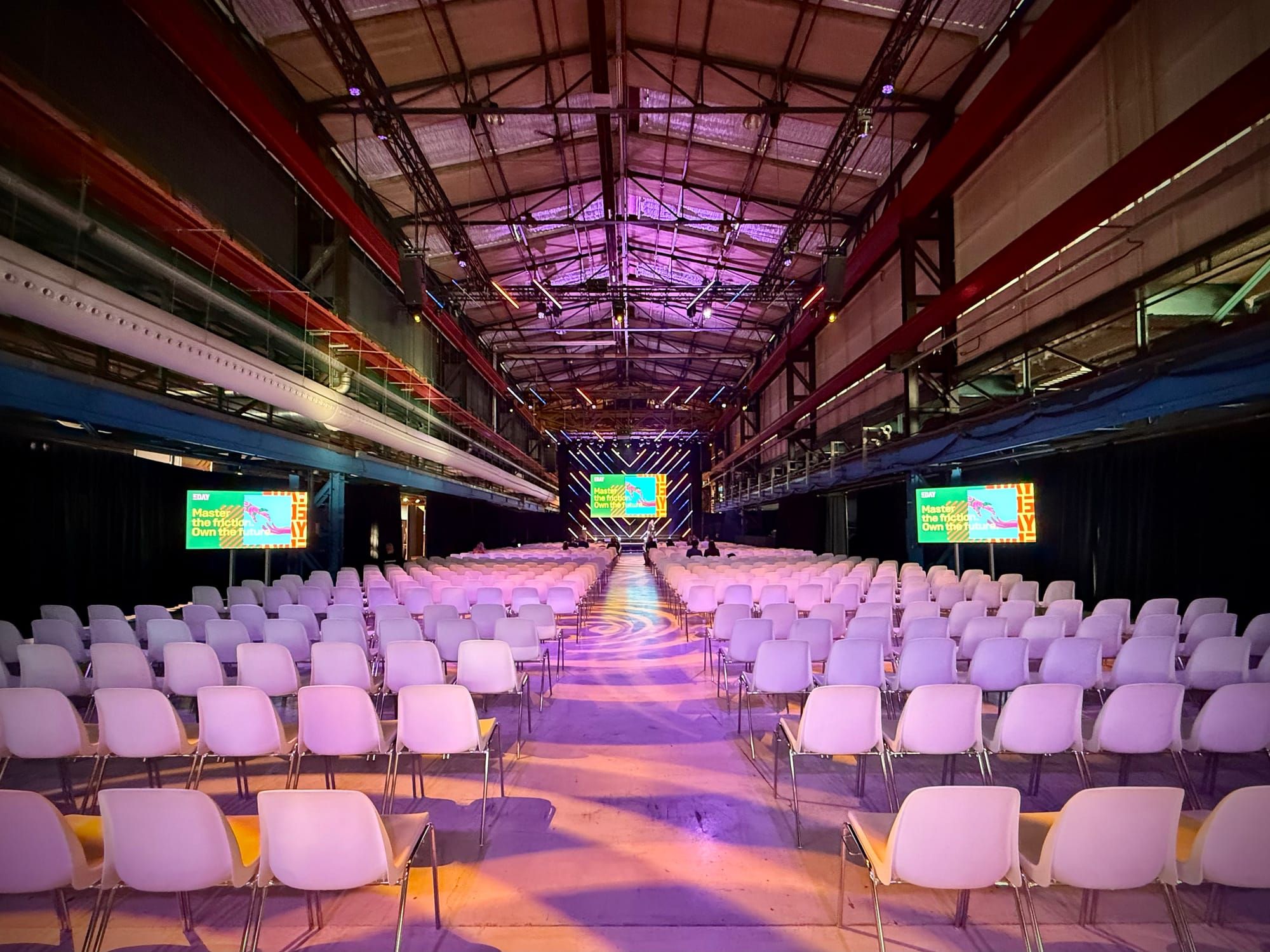
Yesterday, I attended Emerce EDAY in Amsterdam, an event primarily about digital marketing, technology and business. But the session that stayed with me was about something much bigger: Europe's future.
It started with a chance encounter.
At the entrance, I struck up a conversation with a fellow attendee. We walked together for a while before he excused himself to get ahead of the queue. I had no idea who he was.
A little later, I discovered I had been talking to Jo Caudron, the Belgian entrepreneur, author and strategist who was about to deliver one of the day's most thought-provoking presentations.
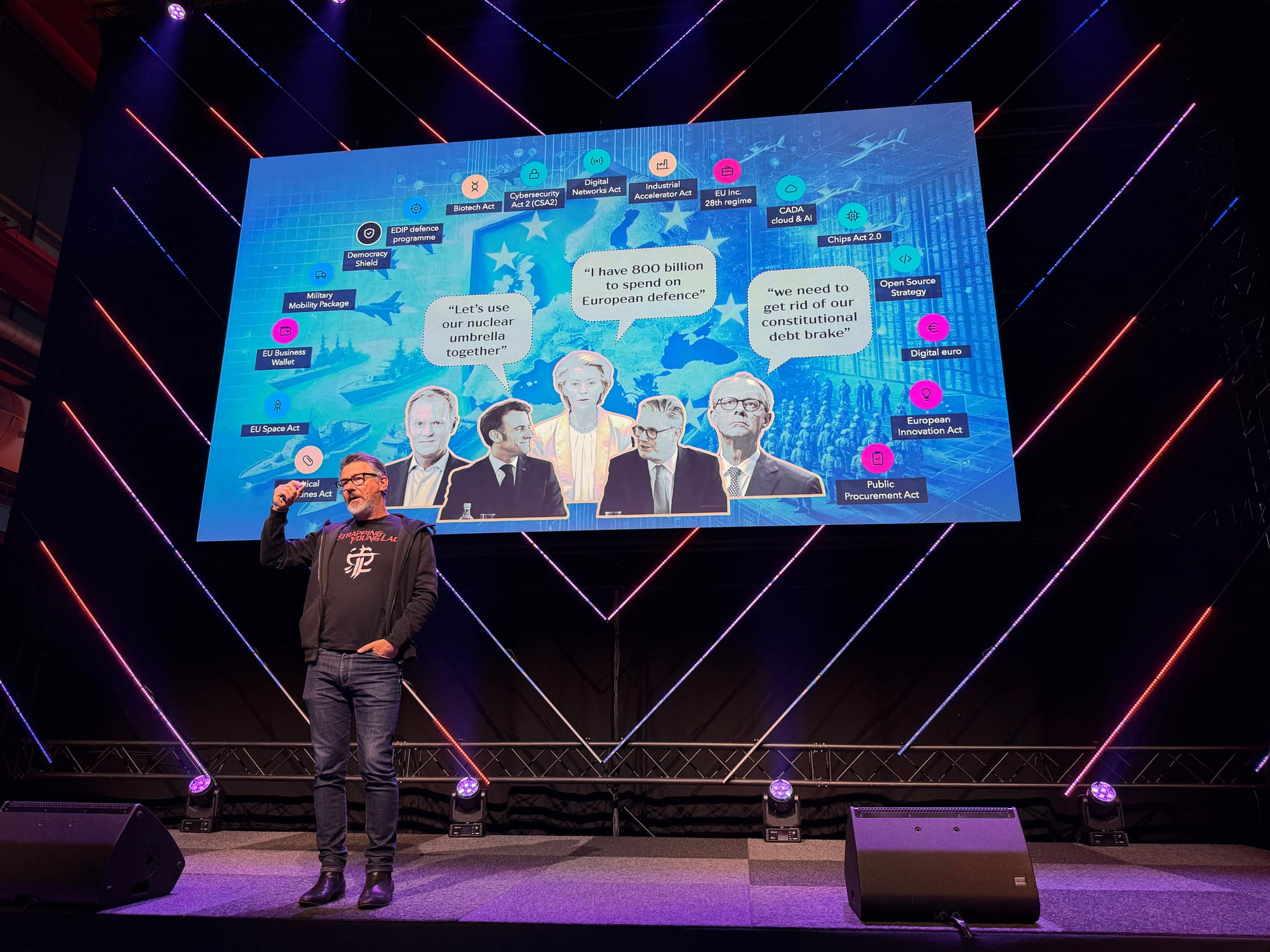
His talk, Worldshock: How Global Disruption Offers Europe New Opportunities, offered a perspective I found both confronting and encouraging.
Nostalgia is a bad strategy
Caudron's central argument was that Europe needs to recognise how fundamentally the world has changed.
He described the difficult meeting between Trump and Zelensky in the White House as a geopolitical turning point, drawing a striking comparison with Pearl Harbor.
His message was clear: Europe cannot simply wait for the old transatlantic relationship to return. Even a change of administration in Washington would not necessarily restore the world we knew.
One phrase stayed with me:
Nostalgia is a bad strategy.
Rather than looking backwards, Europe needs to recognise its own strengths and take responsibility for its future.
What appealed to me was that Caudron didn't stop at describing the threats. He also explored the opportunities emerging from this changing world order.
And that led to my biggest discovery of the day.
Looking at European regulation differently
I tend to look at European technology regulation partly through the lens of its obligations, complexity and costs. The AI Act, for example, raises legitimate questions about compliance burdens and their impact on innovation.
Caudron encouraged me to look at another part of the picture.
European initiatives such as the Chips Act, new proposals for cloud and AI infrastructure, and efforts to strengthen the single market are not simply about regulating economic activity. They are also attempts to create the conditions for it.
There is an important distinction here. The AI Act primarily establishes rules and safeguards for artificial intelligence. The Chips Act and the proposed Cloud and AI Development Act have a different emphasis: strengthening Europe's industrial and technological capabilities.
Common rules can reduce fragmentation. Industrial policies can encourage investment. Joint initiatives can help create markets and capabilities that individual European countries would struggle to develop alone.
In that sense, European legislation can be more than regulation. It can also be an instrument for building Europe's economic and technological future.
Of course, announcing an Act is not the same as delivering results. Legislation cannot create industrial capacity on its own, and proposals still face political negotiations, compromises and the difficulties of implementation.
But I found the shift in perspective valuable.
Europe is not only trying to protect what it has. It is also trying to build what it needs.
But Europe also needs a story
This brought me back to something I feel strongly about.
Europe is much more than the European Union. It is the people who live and work here. The entrepreneurs building businesses, researchers advancing knowledge, engineers developing technologies, educators sharing what they know, and the communities that give Europe its remarkable diversity.
European institutions and legislation have an important role to play, particularly in creating the conditions in which that energy, creativity and ambition can flourish.
And perhaps that is what makes Caudron's perspective so interesting. These initiatives are not ends in themselves. They are instruments that can help people and businesses achieve things that would otherwise be much harder.
The value of an Act is not simply that legislation has been passed. It is what Europeans can subsequently achieve because of it.
After the presentation, I had another opportunity to speak with Caudron.
I told him that while European regulation, investment and institutional cooperation are essential, I believe we also need a compelling story about Europe's future.
Not just a list of initiatives, targets and legislative proposals, but a narrative that connects with the people who live, work and build their lives here.
What kind of Europe are we creating? What opportunities could it offer the next generation? And what makes this shared project worth investing in?
There is another dimension to this that particularly interests me.
Much of the online public conversation in Europe takes place on platforms controlled by companies outside Europe. These are important environments in which people encounter information, exchange ideas and form opinions.
Digital sovereignty is therefore not only about cloud infrastructure, semiconductors or AI. It also concerns our ability to participate in shaping the public conversation about our own future.
We can invest in European technologies and capabilities, but people also need to understand why those investments matter and what possibilities they might create.
And it occurred to me afterwards that Caudron's presentation had done precisely that.
He had taken a complicated, sometimes intimidating collection of geopolitical developments, policies and European initiatives and turned it into a story about possibility.
Not by ignoring the seriousness of the challenges, but by showing that Europe has more choices and more agency than we sometimes recognise.
That was what stayed with me.
I arrived at a digital marketing event expecting to hear about technology and business. I left thinking about Europe's future, and how differently that future might look if we became better at recognising what we can build together.
Thank you, Jo Caudron, for the unexpected conversation and for offering a perspective that continues to make me think.