
The €60,000 LLM Well
Running AI on your own hardware sounds like freedom. The LM Studio demo at WWDC26 makes you calculate what that actually costs, and what it buys you.

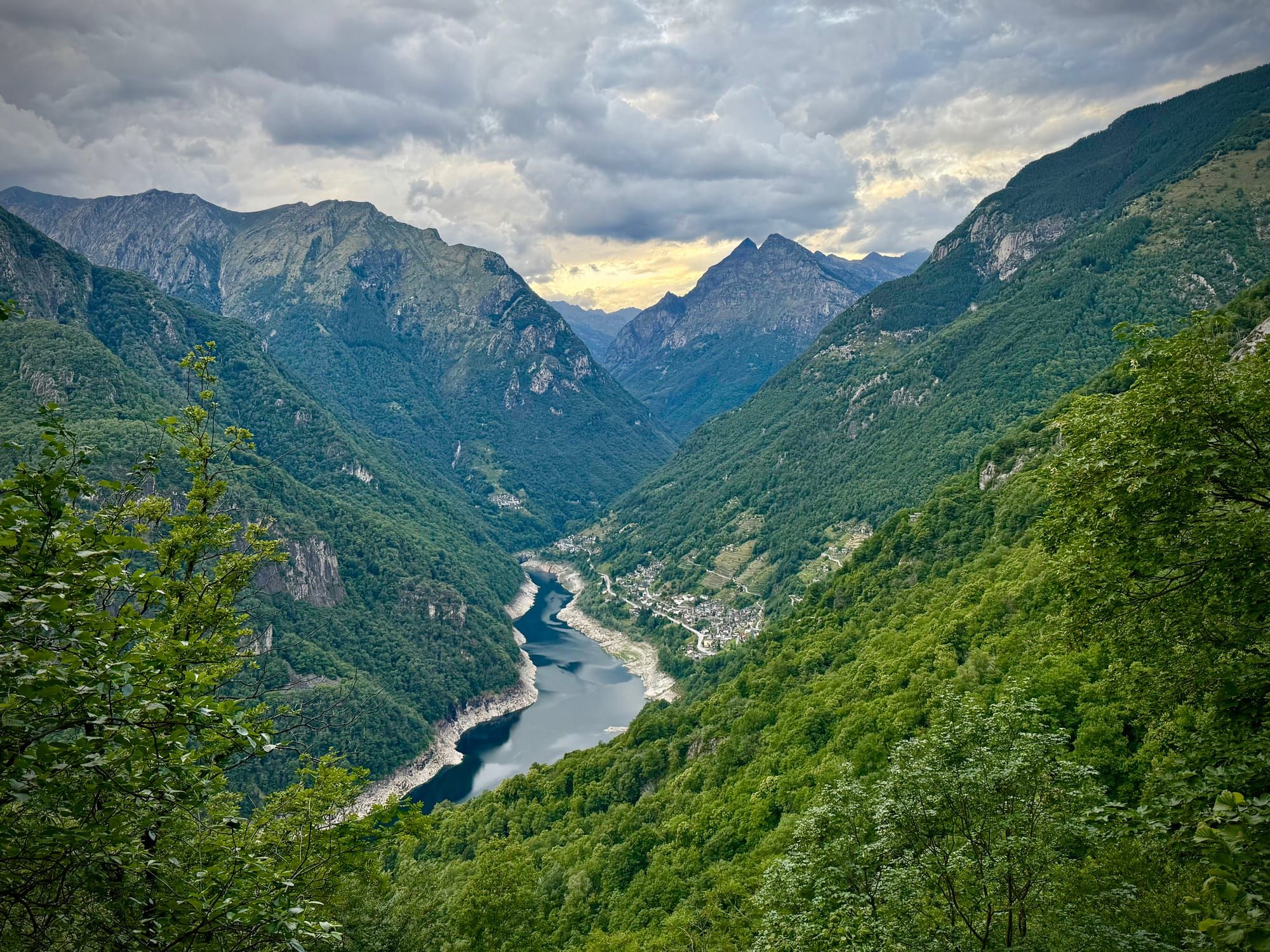
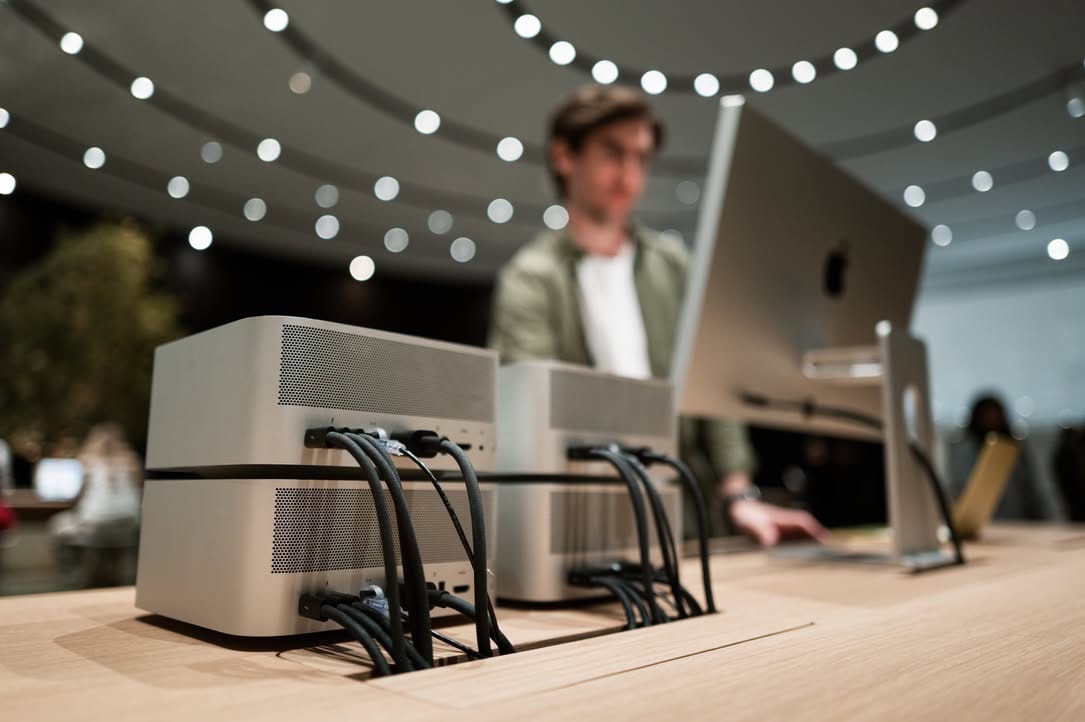
At WWDC26, LM Studio showed four Mac Studios daisy-chained together, 2TB of unified memory, running massive local language models. Someone pulled out an iPhone and chatted with those models over a secure private connection. The crowd loved it. Someone on Threads estimated the setup at €60,000.
The image stuck with me. Not because I want one. Because it crystallises exactly what “AI independence” would actually take.
Digging your own well
There is a type of person who, when the tap water discussion comes up, starts calculating what it would cost to drill a well. They are not wrong to think about it. Understanding the alternative clarifies how dependent you are on the infrastructure you take for granted. But most of them do not actually dig the well.
The €60,000 Mac Studio stack is the AI version of that calculation. It is useful to make it. It sharpens the mind.
So let us make it properly.
What €60,000 buys
Four Mac Studio Ultra units, Thunderbolt interconnects, storage. The hardware enables models in the 400 billion parameter range, open-weight models from families like Llama, DeepSeek, Qwen, or Mistral. These are genuinely capable. On most benchmarks, the best open-weight models now trail the frontier by roughly three months, which is a smaller gap than it was a year ago.
You would run them through a harness: LM Studio itself, or Ollama, or vLLM for more production-oriented setups. These are the tools that wrap the model and make it usable, the software layer between raw weights and actual conversation. The models themselves come from Hugging Face, updated by the research community, available to anyone with the hardware to run them.
The electricity costs are real but not dramatic. Four Mac Studios under sustained load draw around 600 watts. At Dutch rates, heavy daily use comes to roughly €150 to €200 per month. Not nothing, but not a data centre either.
What €60,000 does not buy
This is the part the photo does not show.
The model is the motor. What you experience when you use Claude, or GPT, or Gemini is not just a motor. It is the motor plus years of post-training: the instruction following, the safety calibration, the careful shaping of how the model behaves. It is infrastructure: context windows, retrieval, memory, tool integrations, the ability to search the web or read a file. It is the application layer: specialised tools like Claude Code, built on top of the model for specific workflows. And it is continuous improvement. The motor gets upgraded. Your local setup does not, unless you download and validate a new several-hundred-gigabyte file yourself.
There is also the question of what open-weight models actually run on that 2TB stack. Not Claude. Not GPT-5. The open-weight frontier is impressive and improving fast, but compute at this scale is still concentrated where the training happened, not where the weights ended up.
The ongoing cost
Write-offs over three to four years. Hardware that depreciates while the field moves. Security patches, model updates, inference bugs, monitoring. You become your own IT department. Every improvement in the wider ecosystem requires your active decision to adopt it.
The well metaphor extends further than it first appears. You drill it, you maintain the pump, you test the water quality yourself. Meanwhile the municipal supply quietly improves its filtration, upgrades the pressure, and starts offering mineral variants. Your independence is real. So is the maintenance contract you signed with yourself.
The useful question
None of this means local AI has no place. For specific workloads where privacy is structural, where data cannot leave the building, where latency matters at a level cloud APIs cannot guarantee, the calculation looks different. The ICC left Microsoft 365 for exactly this kind of reasoning. Sovereignty is sometimes worth the cost.
But “worth the cost” requires knowing what the cost actually is. Not just the hardware invoice. The harness work, the maintenance, the gap between what you are running and what the field has moved to by the time you have your well operational.
The €60,000 photo is a useful provocation. It makes the abstraction concrete. AI independence is not a setting you enable. It is an infrastructure decision with a full cost of ownership, a capability ceiling, and a recurring obligation to keep digging.
Most people will choose the tap. That is a reasonable choice, as long as it is a conscious one.