
Leonardo da Vinci and the business of war
What a Renaissance job application tells us about invention, military technology and the relationship between knowledge and power.

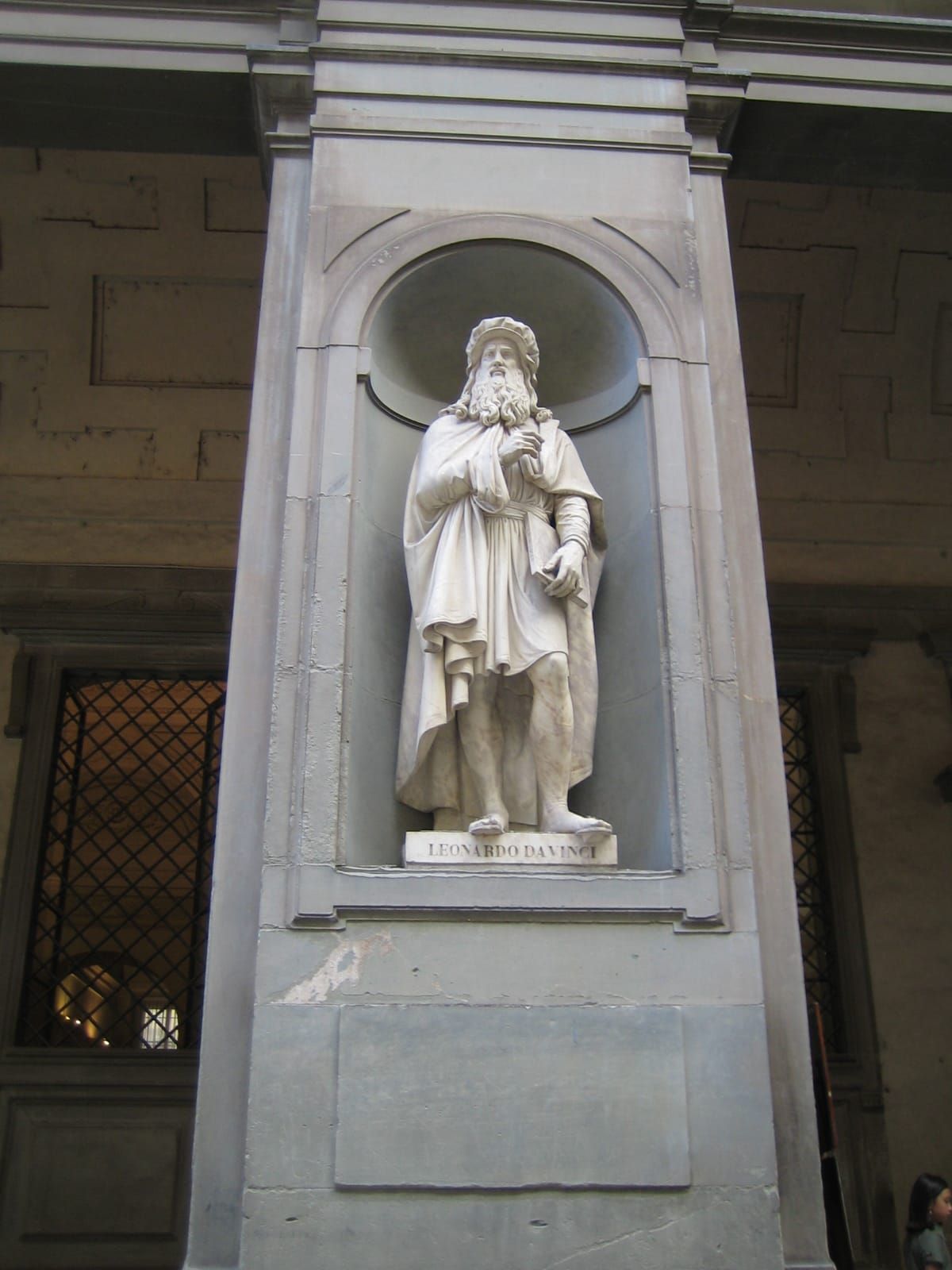
Sometime in the 1480s, Leonardo da Vinci prepared a letter to Ludovico Sforza, the powerful ruler of Milan. He was looking for work and wanted to convince Sforza that his talents would be valuable to the court.
Today, we remember Leonardo as one of history’s greatest artists. We associate him with the Mona Lisa, The Last Supper, the Vitruvian Man and the extraordinary intellectual curiosity of the Renaissance. But if we look at his letter, we discover a rather different Leonardo.
He opened with military engineering.
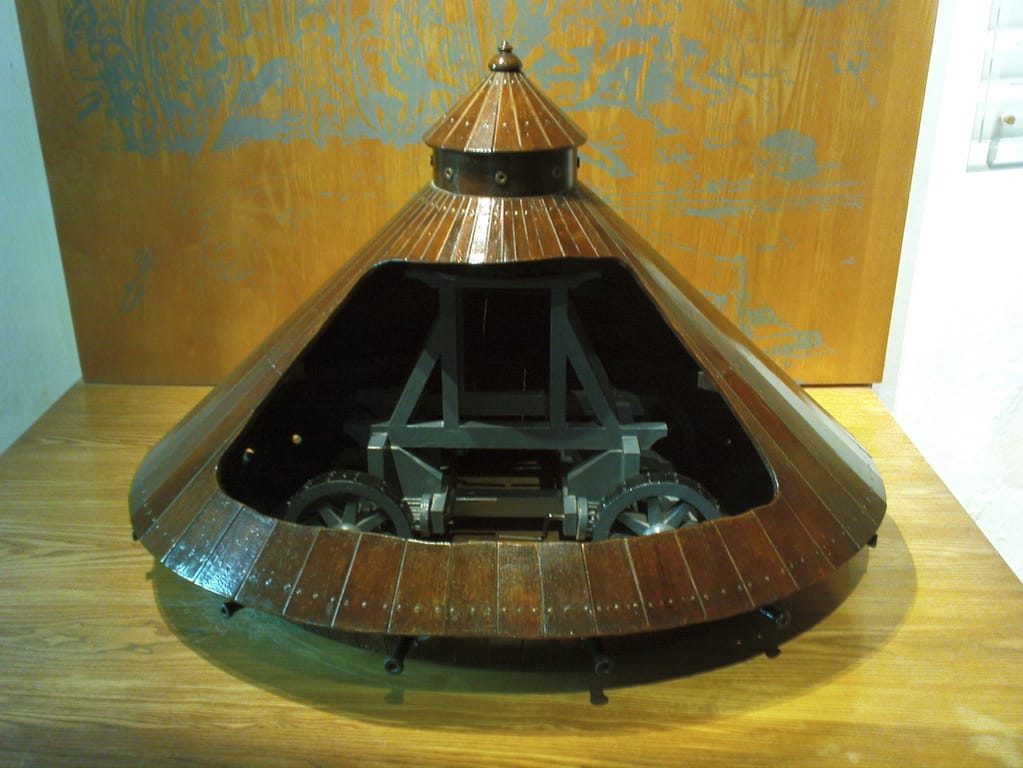
The letter contained ten numbered sections describing what he could offer. Leonardo proposed portable bridges for advancing armies, methods for undermining fortresses, artillery, naval equipment and armoured vehicles. He described ways of overcoming enemy defences, crossing obstacles and constructing tunnels beneath fortifications. Only in the final section did he mention architecture, sculpture and painting.
It is quite an extraordinary job application. One of the most celebrated artists in history presented himself primarily as someone who could help a ruler wage war.
And from a business perspective, it made perfect sense.
Knowing your customer
Ludovico Sforza was not simply a wealthy patron of the arts. He was an ambitious political figure operating in a fragmented Italian peninsula, where competing city-states and powerful families struggled for influence. Military strength, fortifications and the ability to defend territory were important concerns.
Leonardo understood this. His letter identified problems that mattered to Sforza and explained how his technical abilities could help solve them. He even argued that existing military inventions offered little improvement over conventional equipment, while his own methods would provide something new. It reads remarkably like a modern business proposal.
Of course, Leonardo lived in a world without modern companies, research departments or venture capital. Instead, inventors, engineers and artists depended on patrons who could provide money, commissions, resources and access to workshops. The distinction between an artist and an engineer was also considerably less rigid than it is today.
What I find particularly interesting is how naturally Leonardo’s different interests came together. He studied water, movement, geometry, anatomy and the behaviour of materials. Understanding these things could lead to beautiful drawings, useful machinery, better construction methods or more effective weapons. The underlying curiosity was much the same, even when the applications were entirely different.
We should be careful not to confuse all his proposals with functioning inventions. Many of Leonardo’s famous designs were never constructed, and we do not know whether a completed version of this particular letter ever reached Sforza. Nevertheless, the document offers a fascinating glimpse into the relationship between technical ingenuity and the interests of those who could finance it.
A surprisingly familiar relationship
That relationship is worth remembering as Europe once again discusses military capabilities, defence budgets and technological independence.
When we talk about defence expenditure, we tend to think about weapons, ammunition, aircraft and military equipment. Understandably, because those are the things armed forces need. But behind that equipment lies an enormous world of engineering, scientific research, manufacturing, software development and industrial expertise.
Artificial intelligence, robotics, autonomous systems, advanced materials and satellite technology all have military applications. Many also have important civilian uses. The relationship between civilian and military technology works in both directions, and it is not always easy to separate the two.
This makes defence an interesting subject from an innovation perspective. A government that purchases equipment from another country acquires a military capability. A government that invests in developing and manufacturing technology may also help create knowledge, expertise and industrial capacity that remain useful beyond the immediate purchase.
Naturally, spending money on defence does not automatically produce innovation. There have been plenty of expensive failures, impractical inventions and technologies that never progressed beyond prototypes. Leonardo himself left us some remarkable drawings that never became working machines.
Still, there is something worth exploring in the way military requirements can influence technological development. Defence spending creates demand, and demand can give engineers, researchers and manufacturers the resources to pursue ideas that might otherwise remain unexplored.
This is not an argument that military expenditure is inherently good for innovation, nor does it resolve the moral questions surrounding weapons development. It simply means that when governments decide to invest in defence, they are potentially influencing much more than the equipment their armed forces will eventually use.
Back to Leonardo
Leonardo’s letter survives in the Codex Atlanticus, preserved at the Biblioteca Ambrosiana in Milan. More than five centuries later, it remains a fascinating document, not least because it presents such a different picture of someone we think we know.
The artist who studied the human body and painted some of the most beautiful works in history was also interested in designing machines that could destroy fortifications and defeat armies. In his world, those interests were not necessarily contradictory. They were different applications of knowledge and technical ability.
I find that an interesting starting point for thinking about Europe’s renewed attention to defence. Behind the political discussions about budgets, security and military equipment are questions about engineering, research, industrial capabilities and the direction of technological development.
Leonardo would probably have recognised that connection. After all, he was already trying to make a business out of it.