EU Inc.: between words and reality in Europe’s new company proposal
EU Inc. sounds simple: 48 hours, €100, fully online. In reality, it marks a deeper shift in how Europe deals with its fragmented systems.


I have spent a fair bit of time over the past months on something quite mundane: setting up and running a company in the Netherlands. Not in theory, but in practice. Notaries, registrations, tax, the small frictions that come with it.
So when the European Commission comes out with a proposal that says you can start a company in 48 hours, fully online, for under €100, it immediately catches my attention.
Not because I take the headline at face value, but because I recognise the problem it is pointing at.
This proposal is part of what is being called the “28th regime”, often referred to as EU Inc.
 Rob Hoeijmakers
What actually happened
Nothing has changed yet.
I cannot use this. You cannot use this. It does not exist in practice.
What the Commission did is put a proposal on the table. That sounds small, but it isn’t. It moves EU Inc. from an idea into something that now has to be discussed, negotiated, and shaped.
Why this feels different
Europe has tried this before. There is already a European company form, the Societas Europaea. It exists, but in practice you rarely encounter it unless you are dealing with larger structures.
So it is not the ambition that is new.
What feels different to me is the approach.
Instead of trying to align everything between member states, this proposal more or less accepts that alignment is hard, maybe too hard, and tries something else: add a layer on top that is simpler to use.
That is a pragmatic move.
EU Inc. does not replace national systems. It sits next to them. A 28th option, alongside the 27 existing ones.
From system to experience
The way it is presented stands out.
48 hours.
Fully online.
Under €100.
These are not legal categories. This is how you would describe a service.
If you have ever tried to do anything across systems, that framing makes sense. You stop thinking in legal structures and start thinking in time, cost, and predictability.
That is what EU Inc. is trying to address, at least at the starting point.
Giving it a face
This is not a quiet technical file somewhere in Brussels.
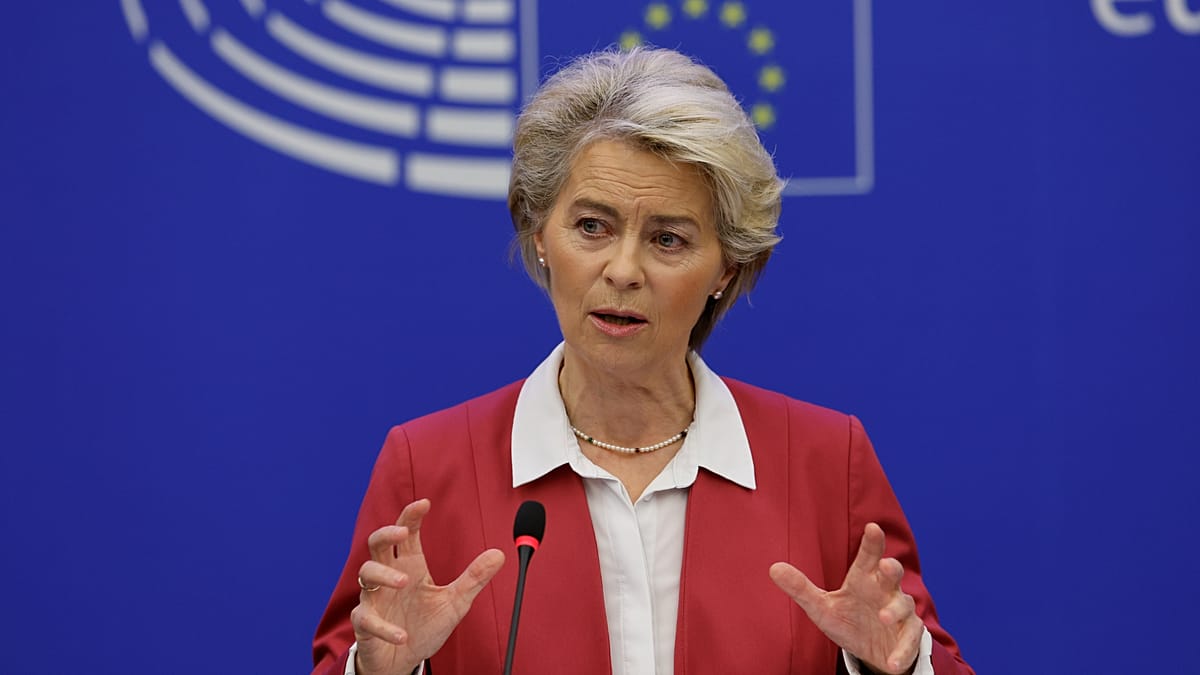
Ursula von der Leyen is putting her name on it. That gives it weight, but also exposure. If this gets diluted or disappears, it will be visible. If something meaningful comes out of it, that will be visible too.
So it raises the stakes.
How I look at it
What strikes me is that this is no longer just an idea.
EU Inc. has been around as a concept for a while. I wrote about it earlier as a way to think about a more unified European company structure. Now it has crossed a line into something the Commission has formally picked up and translated into a proposal.
At the same time, I know how these processes tend to go.
There are domains that remain national and sensitive: taxation, labour law, insolvency. Those are not part of this proposal, and they are not easy to align.
So the question is not whether Europe can make registration faster. It is whether that first step can meaningfully reduce the friction that comes after.
 Rob Hoeijmakers
Where that leaves me
I would not plan anything around this yet.
But I do take it seriously as a signal.
There is a shift here. Less patience with internal complexity, and a more pragmatic attempt to work around it instead of resolving it completely.
EU Inc. is not reality yet.
But it is no longer just an idea either. It is now a proposal that others have to engage with.
And from experience, that is usually where things start to move. Slowly, unevenly, but still, in a direction.