
Back to the file
Thirty years of web technology, and the most reliable setup is still a text file on a server. We just needed AI to get back there.

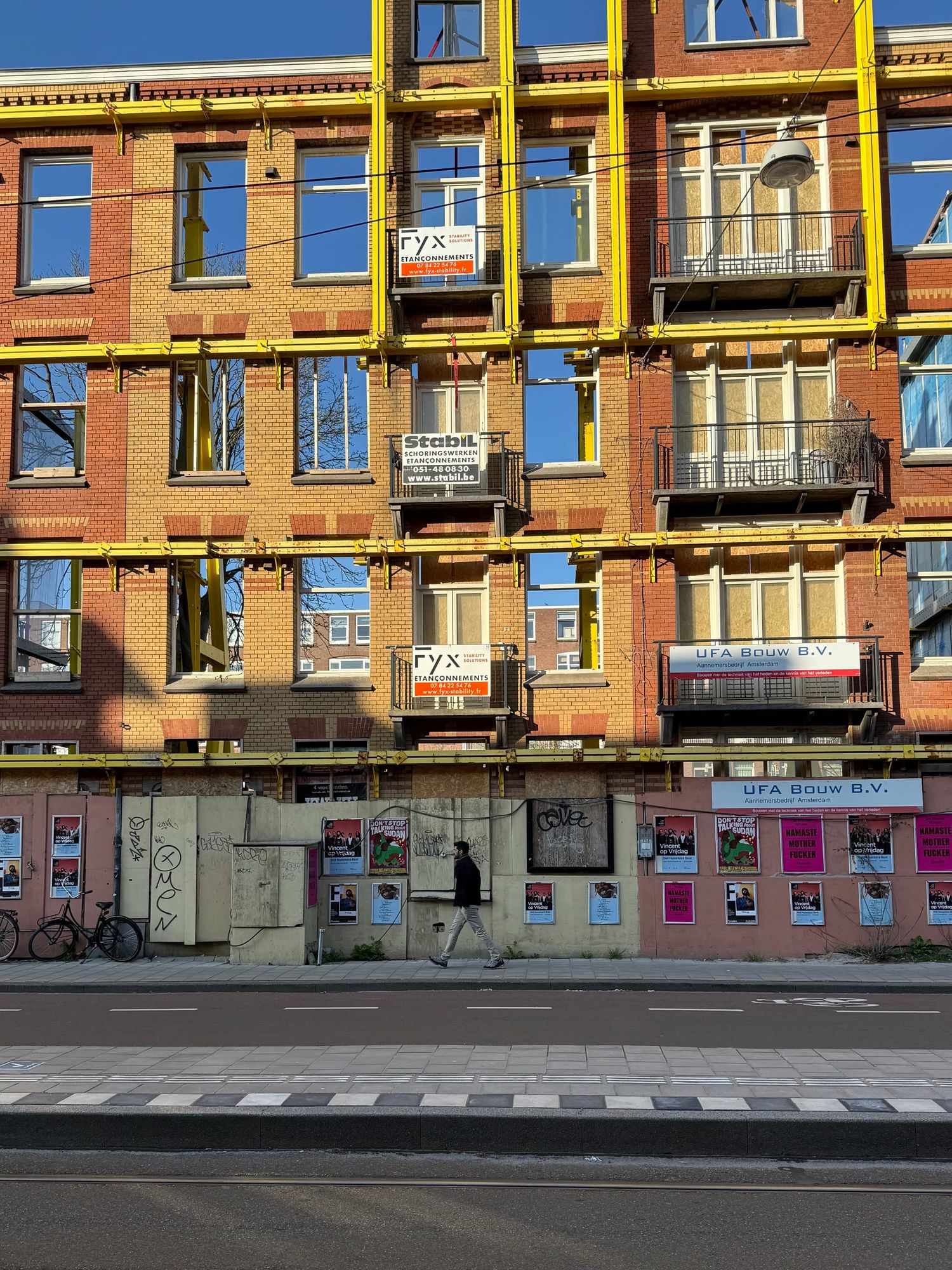
That was 1995 or thereabouts. The web was young, the tools were primitive, and the directness of it all felt natural because there was no alternative. Then the alternatives arrived.
Content management systems. Page builders. Caching layers. Each one a reasonable response to a real problem. Together, a stack that most people running a small website never fully understood and never really needed to. The web got easier to use and harder to own.
The stack I was running
Schmuki.nl, the website of the agency I run with Maya Schmuki, was on WordPress. With Divi on top for visual design, and LiteSpeed Cache underneath for performance. Three systems, each solving a limitation of the one below it. It worked. I was never happy with it.
WordPress is the largest CMS in the world, which tells you something. It grew by becoming a collection point: a core you extend with plugins for anything you might need. Every plugin solves something. Together they form a system that nobody designed as a whole and nobody fully understands. Mediocrity at scale. Not broken enough to replace, never good enough to trust completely.
For a fifteen-page agency website with no dynamic content, no shop, no membership area — the whole thing was elaborate infrastructure for what is ultimately just a set of files.
What Claude Code made possible
I migrated the site using Claude Code, the command-line version of Claude. A coding agent: you describe what you want done, it does it. I am not a developer. I never have been. But I know what I want, and I know how to judge whether something works.
Claude Code directed the process: export the site as static HTML using Simply Static, clean up the images folder, fix all path references, push to GitHub Pages. Step by step, with explanation. I executed, reviewed, fed back what I saw. The judgement stayed with me. The technical execution largely did not have to.
The one real obstacle was LiteSpeed Cache, which generates CSS and JavaScript with hash-based filenames that Simply Static cannot discover. The export was broken until I understood why — and disabling LiteSpeed before running the export solved it. That moment of diagnosis was the one place where my own understanding actually mattered. Everything else, Claude Code handled.
The strange familiarity of it
The site now lives on GitHub. It is a folder of HTML files, a folder of images, and a CSS file. I make changes through Claude Code. The contact form runs through Formspree. There is no server to maintain, no database to worry about, no plugin to update.
It feels oddly like 1995. Not because the technology is the same — it is not, not even close — but because the relationship to the material is the same. You know what is there. You put it there. There is no layer between you and the file.
What is different is that you no longer need to be a technician to work this way. Claude Code is what closes that gap. It translates intent into action precisely enough that the directness developers have always had access to is now available to anyone willing to stay in the loop and exercise judgement. That is not a small thing.
Thirty years later, I am back to editing files. It turns out that was the right way to work all along.
 Rob Hoeijmakers