From Sand to Software: A Whistle-Stop Tour of the AI Value Chain
AI may look like pure software, but it rests on a fragile chain of quartz, optics, fabs, and GPUs. This post traces the journey, stop by stop.


AI often feels immaterial: code, models, prompts. But peel back the layers and you find a story that begins not in Silicon Valley, but in the Appalachian mountains of North Carolina.
There, Belgian company Sibelco mines the world’s purest quartz, from Spruce Pine, a hidden backbone of the chip industry. Without this material, the AI boom would falter before it even began.
This post is a whistle-stop tour of that value chain. I did my best to make it complete, though each stop could be an article in itself.
Quick takeaways
- The world’s AI systems rest on physical foundations, from quartz to GPUs.
- Europe plays a decisive role in optics, lithography, and materials.
- The chain is global, intricate — and fragile, with single points of failure.
1. Raw materials
It all starts underground.
- Quartz — Sibelco mines in Spruce Pine, NC, yield ultra-pure silica glass.
- Silicon — the substrate of nearly all semiconductors.
- Copper and rare metals — essential for interconnects and batteries.
 Ed Conway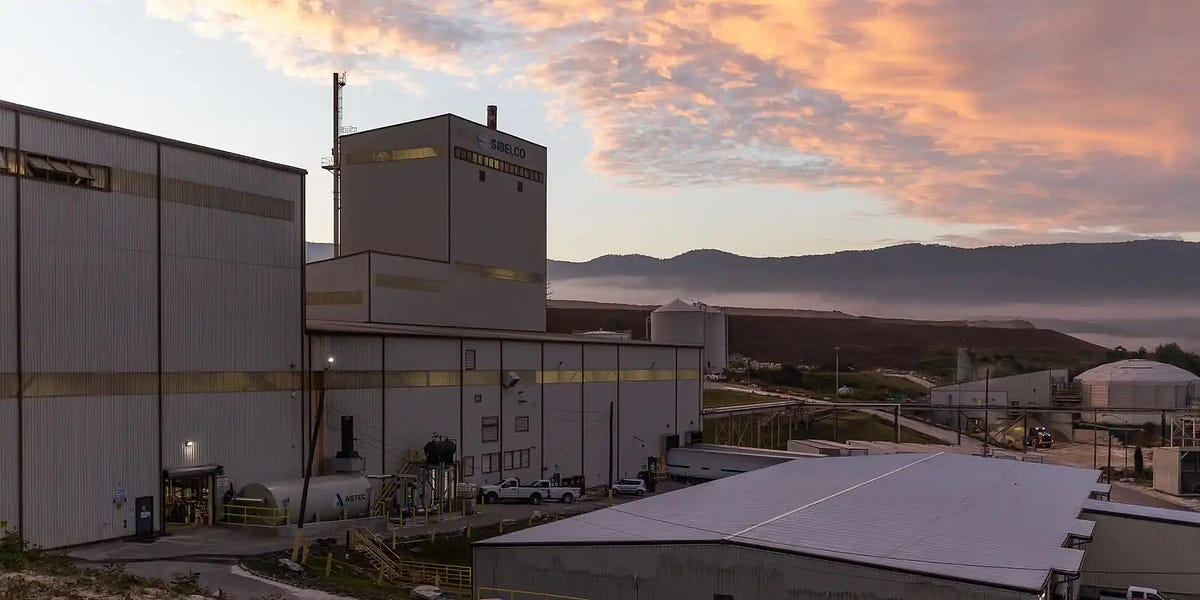
I read about Spruce Pine in the magnificent book by Ed Conway.
2. Wafers, masks, and chemistry
Japan sets the pace here. Purity and precision are the common denominators in this phase.
- Wafers — Shin-Etsu, SUMCO
Grow and polish the silicon crystals on which chips are built. - Mask blanks — HOYA, AGC.
Supply the flawless glass templates used to project circuit patterns. - Resists and chemicals — JSR, TOK.
Develop the light-sensitive coatings and etchants for lithography. - Glass and fused silica — Corning (US)
Turns mined quartz into ultra-pure glass used in photomasks, lenses, and precision optics. A quiet yet crucial bridge between mining and microfabrication.
3. Optics and lithography
Europe’s crown jewels.
- ZEISS (Germany) — extreme-precision mirrors for EUV.
- Schott (Germany) — ZERODUR® glass-ceramics with near-zero thermal expansion.
- ASML (Netherlands) — integrates optics into EUV scanners, unmatched worldwide.
- TRUMPF (Germany) — high-power lasers that generate the EUV light itself.
For EUV optics themselves, the ZEISS–Schott–ASML axis remains uniquely European.
Alongside it runs TRUMPF, whose high-power lasers create the EUV light those optics depend on.
Together they form a self-contained European layer, light, glass, optics, and integration, at the core of the global semiconductor chain.
 Rob Hoeijmakers
4. Semiconductor fabs
Where chips are born.
- TSMC (Taiwan) — the undisputed leader.
- Samsung (Korea) and Intel (US) — key rivals.
- Toolmakers: Applied Materials, Lam Research, Tokyo Electron.
5. Memory and packaging
Bringing data closer to compute.
- HBM memory — SK hynix, Samsung, Micron.
- Packaging — TSMC’s CoWoS and InFO couple GPUs tightly with memory.
6. Accelerators and servers
The engines of training.
- GPUs — NVIDIA and AMD.
- Systems — Supermicro, Dell, HPE.
- Networking — high-speed interconnects and switches.
7. Cloud and energy
The scale on which AI runs.
- Hyperscalers — AWS, Azure, Google, Meta.
- Energy and cooling shape costs, footprints, scalability.
8. Software and frameworks
The tools developers rely on.
- CUDA (NVIDIA)
- PyTorch (Meta/OSS)
- TensorFlow (Google)
- JAX (Google)
9. Models and applications
The visible layer of AI.
- Models — GPT-4 (OpenAI), Claude (Anthropic), Llama (Meta), Mistral (EU).
- Applications — from copilots and search to biotech and industry.
Closing reflection
The AI value chain is a whistle-stop world tour:
- from quartz mines in North Carolina to fabs in Taiwan,
- from glass-ceramics in Mainz to scanners in Veldhoven,
- from GPUs in California to cloud campuses worldwide.
Each link is indispensable and fragile.
Europe owns some of the most irreplaceable pieces, ZEISS, Schott, ASML, Sibelco, yet the highest value now accumulates higher up the stack.
The strategic question remains: who will capture that value, and how can Europe climb without losing its foundations?
Irreplaceable vs. valuable
A lively debate on X shows how contested this question is.
Zeiss makes the things that ASML uses to make the things that TSMC uses to make the things that Nvidia uses to make the things that AI uses. Zeiss is the foundation.
— David Galbraith (@daveg) August 30, 2025
- Some point to NVIDIA: the visible face of AI infrastructure, with direct ties to customers and high margins — the “food” of AI, not just the oxygen.
- Others argue for ASML and ZEISS: without their optics, Moore’s Law grinds to a halt. Their position is uniquely irreplaceable, with no ready competitors.
- Still others look further down, to TSMC or even Spruce Pine quartz, reminding us that without fabs or raw purity, the stack simply cannot exist.
The analogy is striking: oxygen is free but foundational; food is costly because it is scarce.
In AI, the most irreplaceable links are not always those capturing the most profit.
Margins attract competitors. Defensibility comes from being years ahead in know-how, patents, and ecosystem lock-in. That explains why NVIDIA’s moat feels less certain than ASML’s, even if its brand dominates headlines.
This tension, between what is foundational and what is profitable, will define not just markets, but also the geopolitics of AI in the years ahead.
 Rob Hoeijmakers
 Rob Hoeijmakers